
Malnutrition

Diëtist Ondervoeding

Malnutrition? The dietitian helps

Malnutrition means that you have a deficiency of energy (calories), protein, and/or other nutrients. People who are malnourished often lose (too much) weight. However, you cannot always tell from someone’s weight whether they are malnourished. Even with a healthy weight, you may still not be getting enough nutrients.

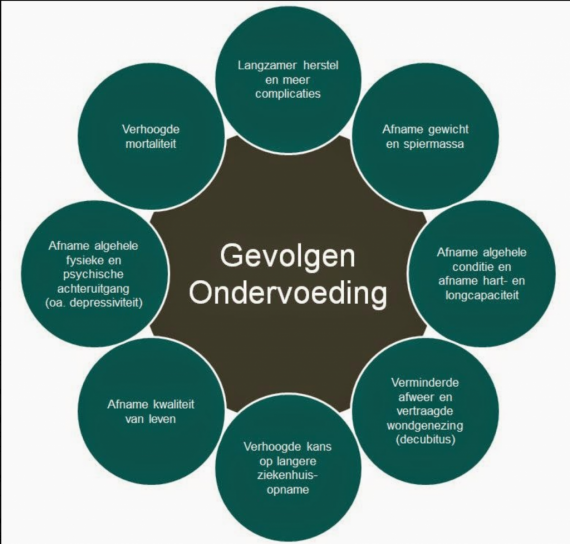
When this happens, you may start to lose muscle mass. You may notice this as a decrease in strength. Your physical condition declines, and your immune system becomes weaker, making you more susceptible to illness. You may feel less well, and if you do get sick, recovery can take longer. Malnutrition can significantly reduce your quality of life.

*You can also be malnourished if you are overweight but lose a lot of weight in a short period of time.*


When are you malnourished?

Malnutrition is assessed based on weight (loss) and differs by age group.

Children: when a child does not grow sufficiently for their age. This can be monitored using growth and weight charts.
Adults: when someone has lost 10% or more of their body weight within six months, or 5% within one month. A BMI below 18.5 (or 21 in COPD) may also indicate malnutrition.
Older adults: the same weight loss criteria as adults, or a BMI below 20.

Make an appointment for your online consult

Start your journey and take the first step with an introductory appointment

Types of malnutrition

Sarcopenia: this is mainly seen in older adults who have a low appetite, limited physical activity, and often a chronic illness. Muscle mass is lost. If body weight remains the same, malnutrition is not always immediately recognized.

Wasting: this occurs when someone eats too little, often due to medical, psychological, or social issues. Muscle mass decreases rapidly, sometimes up to 30% loss. Wasting is often seen in cases of neglect (e.g. dementia patients, psychiatric patients), alcoholism, or severe swallowing and absorption problems (malabsorption).

Cachexia: this is commonly seen in severe illness where nutrient absorption is impaired. Muscle mass loss can reach up to 70%. Cachexia is often observed in terminally ill patients, such as those with cancer or heart failure.

Our approach

Personal approach

1

Dietistenpraktijk Samen Sterk

You contact us

You contact us and pay directly for the appointment online.

2

Dietistenpraktijk Samen Sterk

We can start

We contact you and schedule an appointment with the dietitian to officially start the program.

Dietistenpraktijk Samen Sterk

Risk groups for malnutrition

Some people are at higher risk of becoming malnourished:

  • Vulnerable older adults who are unable to care for themselves properly, whether living at home or in residential or nursing care facilities.
  • Patients with one or more chronic illnesses or those using multiple medications, such as COPD, dementia, cardiovascular diseases, pressure ulcers, depression, inflammatory bowel diseases, cancer, or rheumatic conditions.
  • People with severe psychiatric disorders, sometimes with multiple diagnoses (e.g. depression, schizophrenia, addiction, bipolar disorder).
  • People with one or more physical disabilities.
  • People with chewing or swallowing difficulties due to illness, dental problems, or poorly fitting dentures.
  • People with psychosocial problems, neglect, and/or alcohol and drug abuse.

*If you require medical nutrition (oral nutritional supplements), the dietitian is authorized to arrange this for you.*

How is malnutrition assessed?

A dietitian can determine whether malnutrition is present by using the following assessment tools:

  • BMI: the ratio between height and weight. In some cases, the dietitian may also measure your fat and muscle mass.
  • SNAQ (Short Nutritional Assessment Questionnaire): a questionnaire about weight loss. For older adults, a specific version is used, and upper arm circumference is measured (< 25 cm may indicate malnutrition).
  • Handgrip strength test: this measures muscle strength using a handgrip dynamometer.

How does a dietitian help with malnutrition?

The clinical dietitian diagnoses malnutrition and creates a nutritional treatment plan. First, they assess whether malnutrition can be treated with regular foods. This involves calculating your (increased) nutritional needs and developing a personalized treatment plan. The dietitian also looks at other potential issues, such as reduced appetite, chewing or swallowing difficulties, or changes in taste. If necessary, the dietitian can determine whether (temporary) medical nutrition is needed, such as oral nutritional supplements or modular products. In cases of severe malnutrition, tube feeding may be required, which the dietitian will discuss with your (general) practitioner.

*Did you know that your muscle mass decreases by 3–8% every 10 years starting from the age of 30? Physical activity can help slow down this process.*

Diëtist ondervoeding advies

Your dietitian is your nutrition coach

When you sign up with us, we schedule an intake as soon as possible. During the intake, we take the time to gain insight into your situation and health. Where are you now and, more importantly, where do you want to go? What are your goals and needs, as well as your limitations. During the intake, we review your eating pattern: what do you eat, when, and how much? We also explore why you make certain choices. It is important to understand what has caused the malnutrition and how severe it is.

After that, we create a personalized plan. This advice is practical, personal, and achievable for you. You may still have many questions during the first consultation, we take the time to answer them. During the process, we coach you step by step toward a healthier lifestyle. Your dietitian advises and motivates you, even when things get a bit more challenging.

Your dietitian:

  • listens to your wishes and needs
  • involves you in setting your goals
  • explains anything you have questions about
  • always provides tailored advice
  • motivates you, regardless of how you are doing
  • coaches you toward a healthier lifestyle, in small or larger steps

Your dietitian helps you get on track, so that you learn how to live a healthy and comfortable life and overcome malnutrition.

Frequently asked questions

Can a dietitian help with malnutrition?

Yes. A dietitian diagnoses malnutrition, creates a personalized treatment plan, and calculates increased nutritional needs. They advise on regular nutrition and are authorized to arrange medical nutrition, such as oral supplements or tube feeding, if needed.

Which diet is recommended for malnutrition?

There is no standard “malnutrition diet.” A dietitian creates a personalized plan focused on increasing energy (calorie) and protein intake, often by enriching regular foods or, if necessary, using medical nutritional supplements.

What are the symptoms of malnutrition?

There is no standard “malnutrition diet.” A dietitian creates a personalized plan focused on increasing energy (calorie) and protein intake, often by enriching regular foods or, if necessary, using medical nutritional supplements.

How do you recognize hidden (silent) malnutrition?

Hidden (silent) malnutrition can occur even when body weight remains stable, due to loss of muscle mass (sarcopenia), which you may notice as reduced strength. Assessment tools such as BMI, the SNAQ questionnaire, and a handgrip strength test can help with diagnosis.

Book an online appointment

Please fill in the form and pay for the appointment online. We will then contact you as soon as possible to schedule an online consultation.

Pakketten